

Upper Mustang: what no travel guide will tell you
Every travel guide to Upper Mustang tells you the same things.
It will mention the restricted area permit — currently USD 500 for ten days. It will describe Lo Manthang, the ancient walled capital, as "a medieval city frozen in time." It will recommend the best months — March to November, avoiding the monsoon — and list the standard checkpoints your trekking team will pass through on the way north from Kagbeni.
All of this is accurate. None of it will prepare you for what Upper Mustang actually is.
I have been to Upper Mustang more times than I can count with precision. I have watched guests arrive with a mental image built from travel magazines and leave with something they struggle to put into words. The landscape does something to people that photographs cannot replicate and itineraries cannot schedule.
This is what the guides leave out.
The silence is not metaphorical
When people say a place is quiet, they usually mean it is peaceful. Relaxing. Unhurried.
Upper Mustang is not that kind of quiet.
Above Kagbeni, north of the Kali Gandaki gorge, you cross into a rain shadow that sits beyond the reach of the monsoon and — in a way that is difficult to fully articulate — beyond the reach of much else. The wind is constant but not loud. The landscape is vast but not dramatic in the theatrical way the word suggests. It is simply enormous, and ancient, and indifferent to your presence in a way that the rest of Nepal — warm and hospitable and full of life — is not.
The silence in Upper Mustang is geological. It has been there for thousands of years and it will be there long after every traveller who has ever visited has gone. Standing in it is one of the more unusual sensations available to a modern person — the feeling of being genuinely, completely, unremarkably small.
Most guests do not know how to feel about this on the first day. By the third day, they do not want to leave.
The permit exists for a reason — and it is not what you think
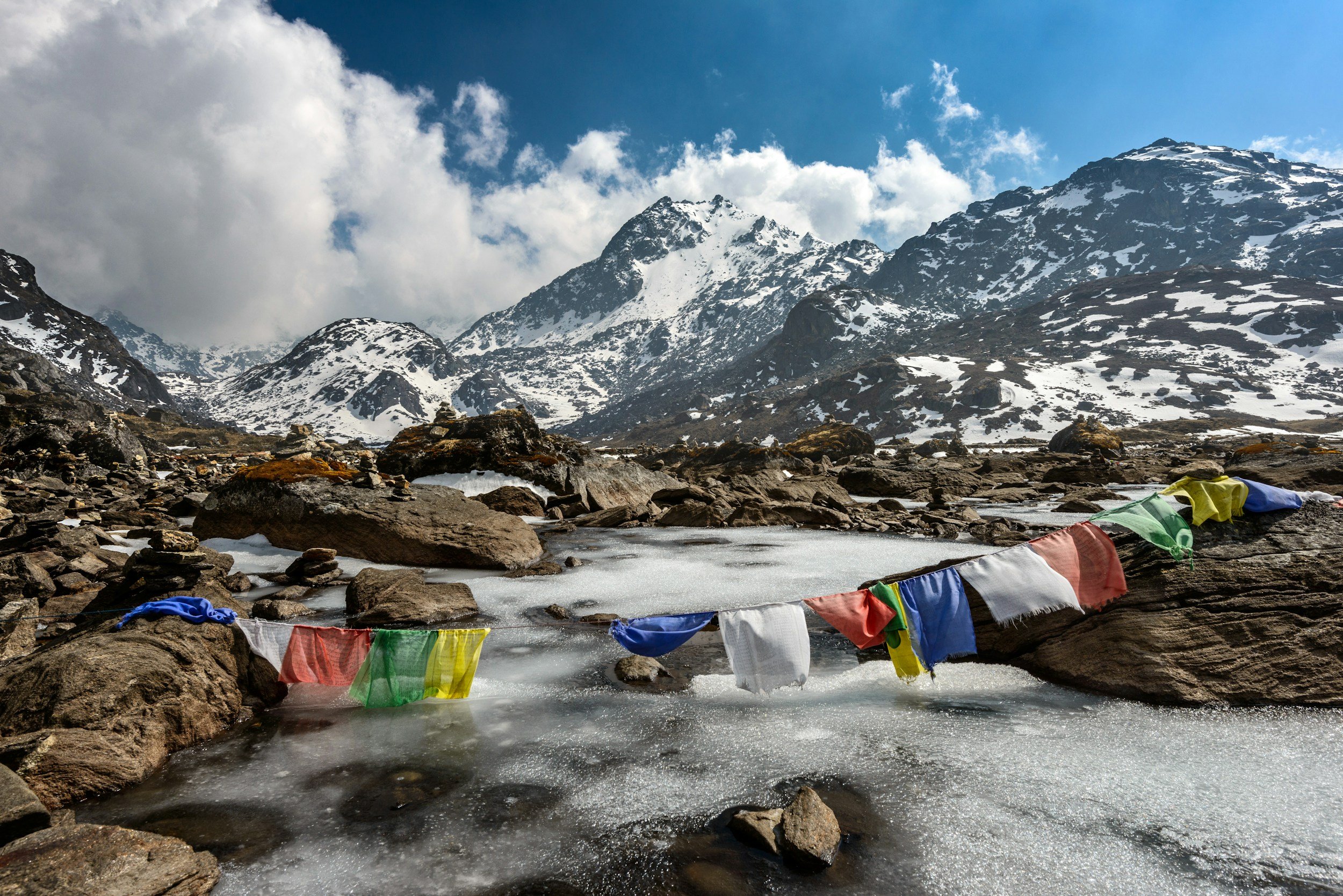
The USD 500 restricted area permit surprises many visitors when they first research Upper Mustang. It is the most expensive trekking permit in Nepal by a significant margin, and first-time researchers sometimes assume it is simply bureaucratic revenue collection.
It is not. Or at least, it is not only that.
Upper Mustang was closed to foreign visitors entirely until 1992. The region shares a cultural and ethnic identity with Tibet — the people, the language, the monasteries, the traditions — and the permit system was designed, in part, to manage the pace at which the outside world arrives. Lo Manthang, the walled capital that has been continuously inhabited for over 600 years, still has a king. The Loba people, as they call themselves, have maintained a way of life that has changed less in the last century than almost anywhere else on earth.
The permit cap limits the number of visitors meaningfully. This is, from the perspective of anyone who cares about what makes Upper Mustang worth visiting, exactly the right policy.
When you arrive in Lo Manthang and find yourself walking streets that have been walked the same way for six centuries, the permit feels less like an entry fee and more like a membership to something worth protecting.
Lo Manthang is not a ruin
This is the most important thing I want to correct about the standard travel narrative.
Lo Manthang is frequently described as "frozen in time" or "a living museum." Both phrases imply stasis — a place preserved because it has stopped moving. This is wrong in a way that matters.
Lo Manthang is alive. The monasteries are active. The monks are young as well as old. The Tiji festival — three days of ritual ceremony that re-enacts the defeat of a demon threatening to destroy the kingdom — draws the entire community together in a way that has nothing performative about it. This is not a ceremony staged for tourists. It is a ceremony that tourists are occasionally permitted to witness.
The distinction is everything.
When you sit in the courtyard of Thubchen Gompa — a monastery built in the 15th century, its walls covered in murals that have been carefully restored over the past two decades — you are not in a museum. You are in a place of active spiritual life. The butter lamps are lit because someone lit them this morning. The offerings are fresh. The monks chanting in the next room are not performing; they are praying.
This is what private, locally-guided access makes possible. Not the observation of a culture from behind a barrier, but a careful, respectful introduction to it.
The landscape is not what you expect
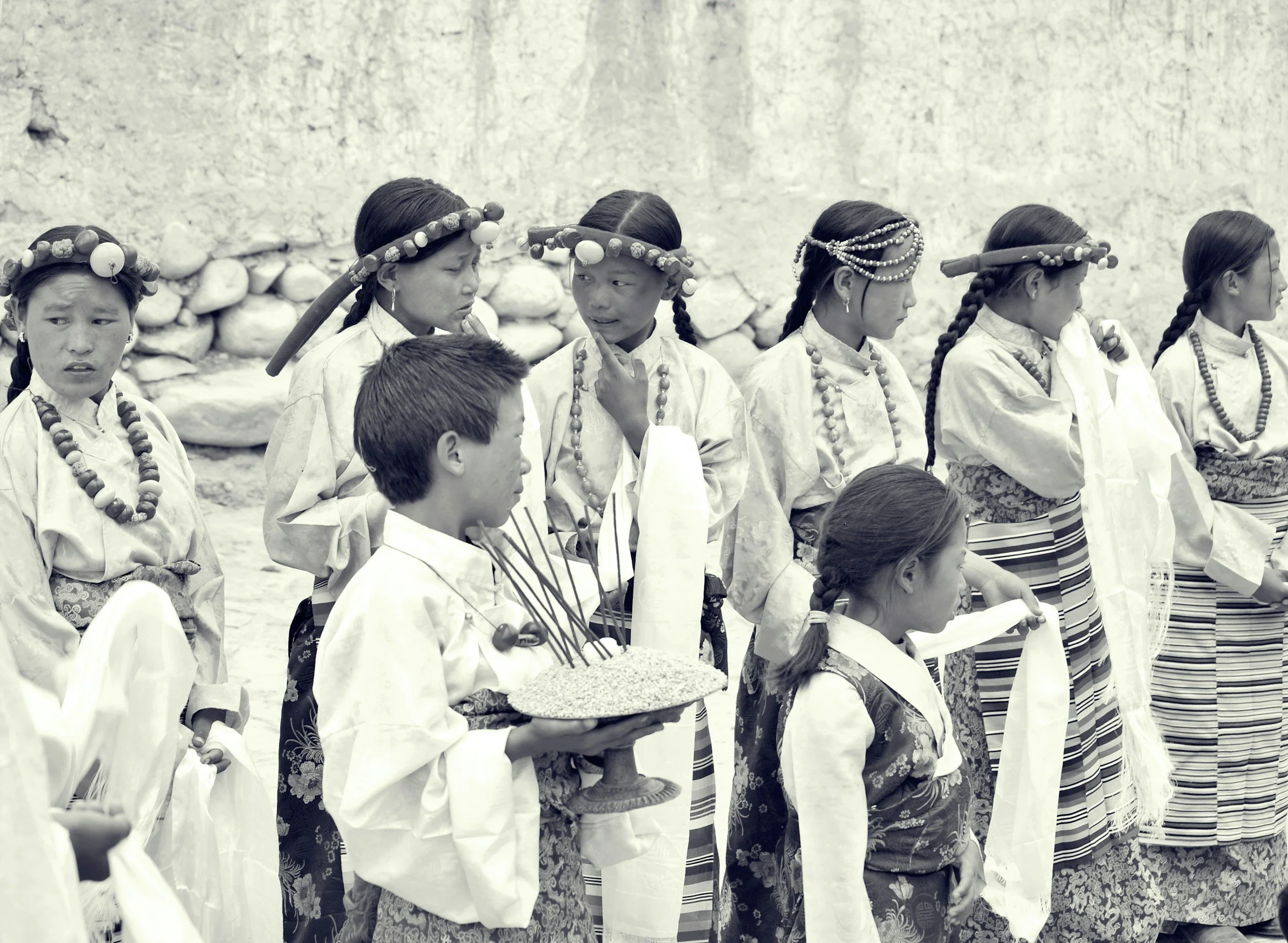
Most visitors to Nepal arrive with a mental image dominated by green — the rhododendron forests, the terraced rice paddies, the lush mid-hills that characterise so much of the country's landscape photography.
Upper Mustang is not green. It barely has vegetation. The colours are ochre, rust, deep red, burnt sienna, grey — the palette of eroded canyon country, of a landscape shaped by wind and time rather than water and growth. The Kali Gandaki, one of the world's deepest gorges, cuts through the south of the region. The terrain north of Kagbeni opens into a high plateau that looks, to many first-time visitors, more like the American Southwest or the Tibetan plateau than the Nepal they imagined.
This is part of what makes it so disorienting in the best possible way. You arrive having seen photographs. The photographs have not lied — but they have not told the whole truth either. The scale, the colour, the texture of the rock underfoot, the way the light changes through the day as the shadows lengthen across the canyon walls — these are things that exist only in the experience of being there.
The sky is a particular shade of blue at altitude that I have not seen replicated anywhere else. On a clear October afternoon, standing on the plateau north of Lo Manthang, it is so deep and uninterrupted that it looks almost artificial — like a backdrop, not the actual sky.
What the private experience makes possible
A standard trekking group through Upper Mustang moves at a fixed pace, sleeps in teahouses with other trekkers, and experiences the region through the lens of a shared schedule. This is a legitimate way to see Mustang. It is not the only way.
A private journey — designed entirely around your party — allows for something different.
You stop when something is worth stopping for, not when the group schedule permits. You spend three hours in a monastery because the conversation with the head lama took an unexpected turn and everyone in your party is absorbed. You take a different trail because your local guide knows the canyon view from the western ridge at sunset is one of the finest things in the region and no guidebook has mentioned it.
You stay in accommodation that reflects the landscape rather than apologising for it — intimate lodge rooms with views that justify getting up before sunrise, private terraces, meals prepared from local ingredients that connect you to the food culture of the Loba people rather than accommodating foreign preferences.
You travel by private 4x4 for the sections where the terrain is better covered by vehicle, and you trek the sections where walking is the only way to actually arrive somewhere rather than simply pass through it.
The difference between a group trek through Upper Mustang and a private journey is not primarily logistical. It is the difference between seeing a place and meeting it.
When to go — the honest answer
The standard advice — March to November, avoiding monsoon — is correct as far as it goes.
But within that window, the experience varies considerably.
May is when the Tiji festival takes place in Lo Manthang. If witnessing one of the most extraordinary traditional ceremonies in the Himalayan world is a priority, plan around this. Dates shift each year based on the Tibetan lunar calendar — we track this annually and incorporate it into journey planning for guests who want to be there.
October brings the clearest skies and the sharpest mountain views. The apple harvest in Mustang is in full swing — the region is one of Nepal's primary apple-growing areas, a fact that surprises most visitors — and the villages take on a particular warmth and productivity that is different from other times of year.
June through August — the monsoon months that empty most of Nepal's trekking routes — are actually viable in Upper Mustang precisely because the rain shadow keeps the region dry. This is when you have the landscape almost entirely to yourself. For guests who value solitude as the primary luxury, this window is the most extraordinary of all.
The thing that stays with you
I have guided many people through many parts of Nepal. Upper Mustang is the destination that generates the most messages after the journey ends.
Not immediately — guests are often quiet for the first few days after returning, processing something that does not resolve into easy language. But a few weeks later, or a few months, a message arrives. It usually says some version of the same thing: that the trip changed the way they think about scale, or time, or how much of the world they had assumed they understood.
This is not something I can manufacture in a travel itinerary. The landscape does it. The history does it. The silence, specifically that geological silence I described at the beginning, does it.
What I can do is create the conditions for it to happen — the right pace, the right access, the right moments of unscheduled stillness. A journey through Upper Mustang that does not include those moments is a journey that has missed the point.
A note on access
Upper Mustang requires the restricted area permit, a registered trekking agency, and a licensed guide. Independent travel is not permitted. All logistics — permits, accommodation, transport, guiding — are managed entirely by us as part of the private journey design.
If Upper Mustang is a destination you have been considering, the best starting point is a conversation about what you want to feel when you are there. The itinerary follows from that.
Nepal as a Local designs exclusively private journeys through Upper Mustang and across Nepal's most extraordinary landscapes — one party at a time, with no compromises on access, pace, or experience. If this is the journey you have been looking for, begin the conversation below.