

Nepal: the new frontier of exotic luxury travel in 2026
There is a phrase circulating among the world's leading luxury travel advisors in 2026 that would have sounded unusual five years ago.
The whycation.
Today's sophisticated travelers are soul-searching about why they're going. This shift has sparked a trend toward fewer but more meaningful journeys, with many opting to trade multiple short getaways for one transformative expedition. As Virtuoso's vice president of global public relations put it: "Ultra-high-net-worth travelers aren't just spending — they're investing in transformative, personalised journeys where exclusivity has become the ultimate measure of luxury."
The destination that answers the why better than almost anywhere else on earth has been here all along. Most of the world simply hasn't been paying attention.
That is changing.
What luxury means in 2026
The old markers of high-end travel — the thread count, the Michelin stars, the brand of the welcome amenity — have not disappeared. They have become the floor, not the ceiling. For the ultra-high-net-worth traveler of 2026, these things are assumed. They are not the reason you choose a destination.
Private expeditions, curated cultural immersions, and wellness-focused retreats now represent refined expressions of wealth — offering something tangible assets cannot: transformation, connection, and personal fulfillment.
Across the luxury sector, the shift is clear: luxury in 2026 will prioritize meaning over materialism, as travelers increasingly seek experiences that create emotional impact, authenticity, and cultural resonance. Experiences that feel personal, immersive, and authentic will increasingly define what travelers perceive as true luxury.
This is precisely the territory Nepal has occupied for centuries — long before the luxury travel industry caught up with the language to describe it.
The new currency: access over ownership
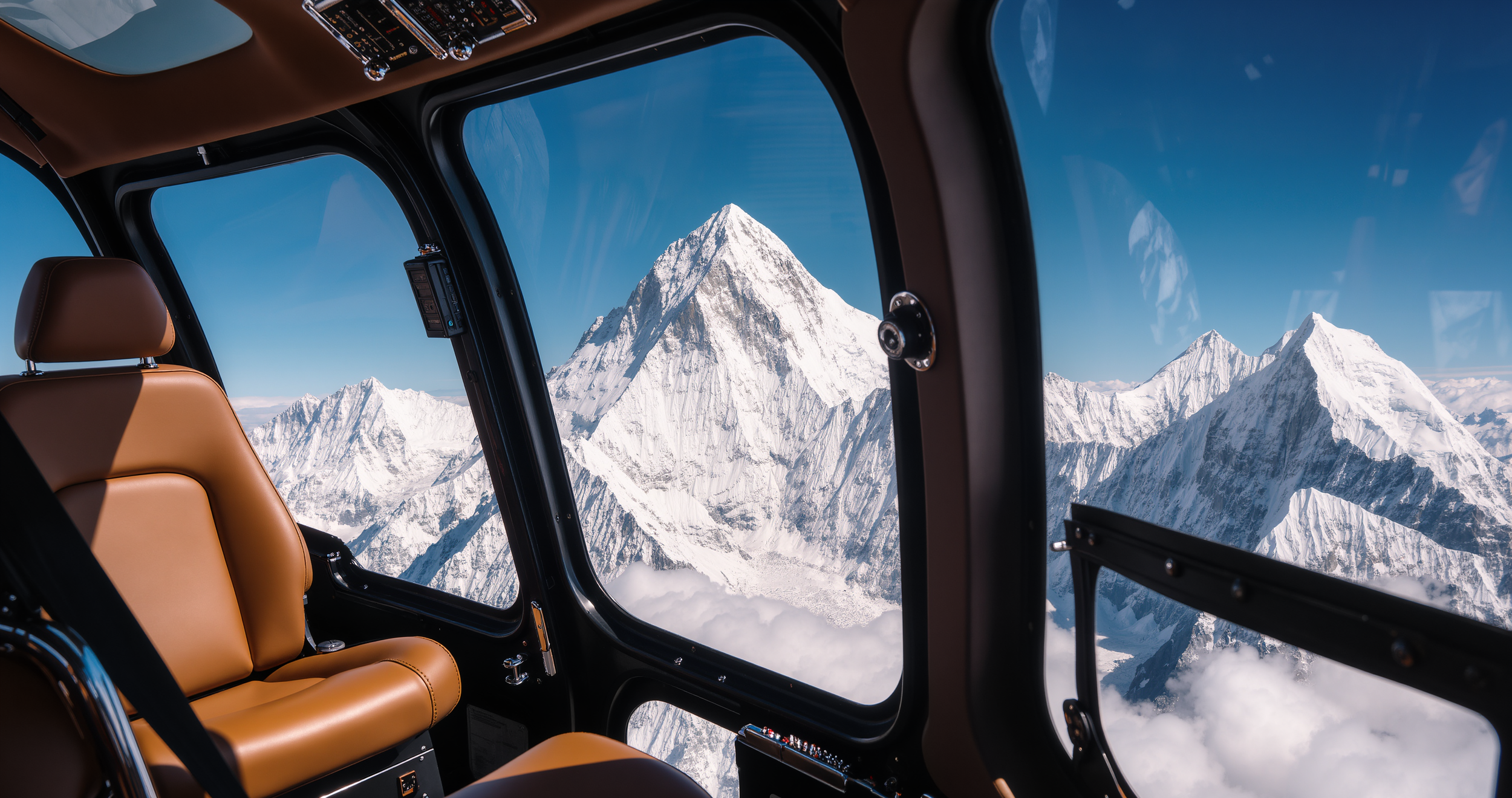
Sceinic Everest Region Helicopter tour- Nepal as a Local
Access, rather than ownership, is becoming the new currency of luxury. Bespoke private membership clubs and exclusive operators are reshaping how high-net-worth travelers experience the world, offering hyper-personalized itineraries and entry to destinations and events unavailable to the general public.
Nepal offers access of a kind that money alone cannot engineer in most parts of the world. Upper Mustang — the ancient restricted kingdom sitting beyond the Himalayan rain shadow — has a permit cap that limits annual visitors to a fraction of what popular luxury destinations receive in a single weekend. The Tiji festival in Lo Manthang, one of the most extraordinary ceremonial events in the Himalayan world, is not staged for tourism. It is a living tradition, and witnessing it requires the kind of local relationships that take years to build.
The new luxury is going to destinations that are not crowded. High-value, low-volume destinations — where the experience is shaped by genuine scarcity, not manufactured exclusivity — are what the world's most traveled people are actively seeking in 2026.
Nepal is the definition of high value, low volume. And unlike artificially scarce luxury products, its scarcity is real — written into geography, permit law, and the ancient rhythms of communities that have been here for centuries.
Three things Nepal offers that 2026's luxury traveler is actively searching for
1. Wellness that goes beyond the spa
Wellness has moved from a complementary offering to a central motivator of luxury travel in 2026. Travelers are increasingly seeking journeys that combine physical restoration, mental clarity, and long-term wellbeing through mindfulness programs, medical wellness retreats, and purpose-driven escapes.
In most luxury destinations, wellness is a service layer — something added onto accommodation and experiences as an amenity. A yoga class before breakfast. A treatment menu at the spa.
In Nepal, wellness is structural. It is built into the altitude, the silence, the pace, and the spiritual culture that shapes everything around you. Private meditation sessions led by masters in monasteries that have practiced these traditions for five centuries. Guided dawn practices on terraces overlooking valleys so vast they make the mind quiet by force. Ayurvedic treatments in settings where these practices were not imported as a hotel concept but have existed as daily life for generations.
This is what the world's most discerning wellness travelers are looking for — and cannot find in Bali or Tuscany or the Maldives, because those destinations have been optimised for tourism in ways that Nepal, at its best, has not.
2. Cultural depth that is genuinely unscripted
Luxury travelers in 2026 are craving authentic moments — the growing desire for cultural immersion is one of the most consistent signals across every major luxury travel report this year. Exclusive, personalized moments have become the new benchmark of status and value.
In Nepal, with the right local expertise, culture is not a performance. A private morning in the home of a Newari family, learning the preparation of a feast that has been made the same way for twelve generations. Exclusive access to a closed religious ceremony that the surrounding community has been preparing for months. A conversation with a head lama about impermanence that you did not plan and cannot schedule — it simply happened because you were in the right place, with the right guide, at the right time.
Today's luxury traveler isn't asking for more — they're asking for better. Better impact, better alignment with their values, and smarter use of their time, money, and emotional bandwidth. Nepal's living culture — Buddhist, Hindu, Newari, Tibetan, Sherpa — meets this demand at every level, continuously, in ways that compound across the length of a journey into something that outlasts the trip itself.
3. Landscapes that produce transformation, not just photographs
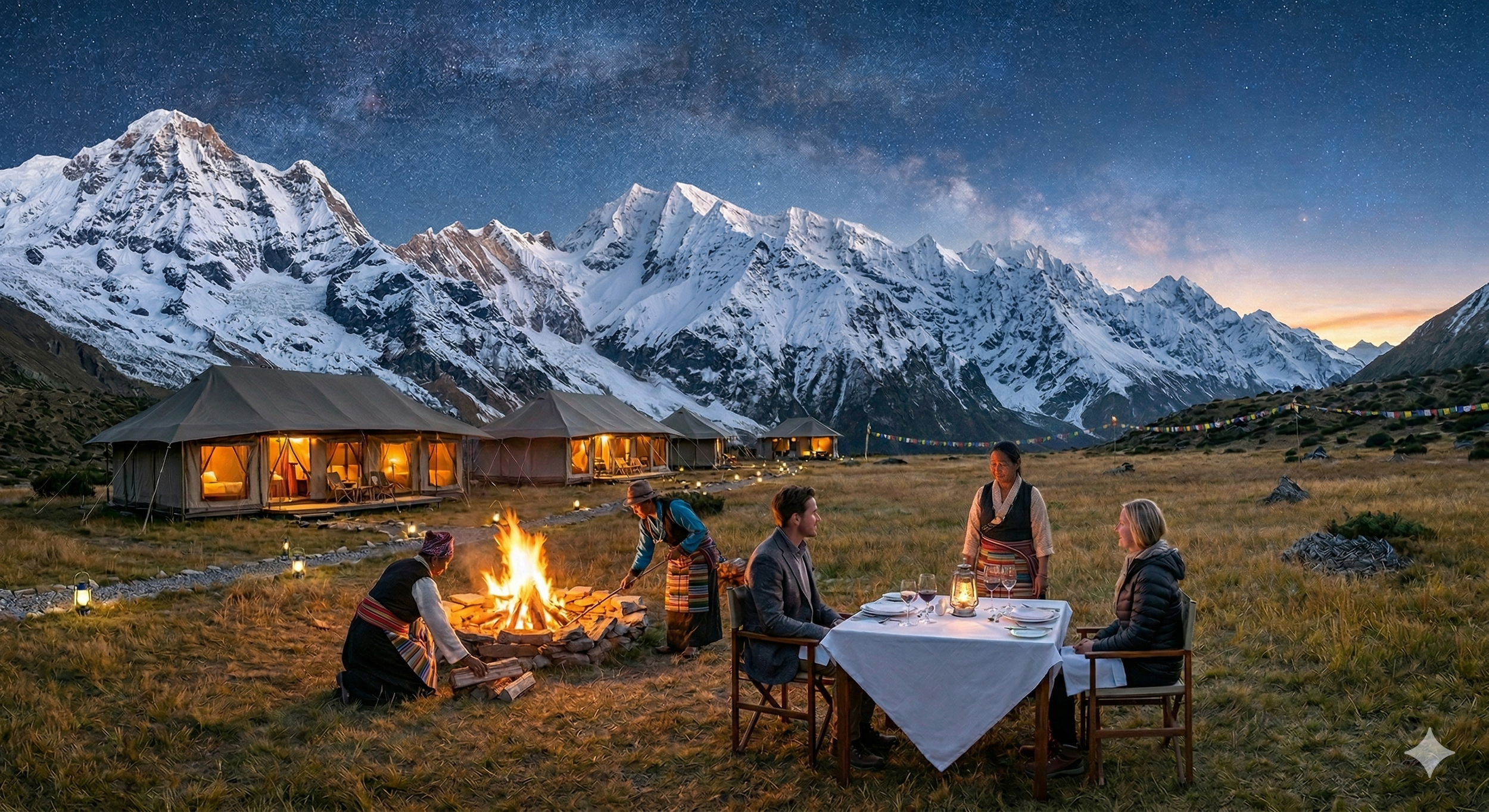
There is documented psychology behind what happens to humans in the presence of genuinely awe-inspiring environments. Creativity increases. The mental distance required to question existing assumptions becomes available. The cognitive chatter that fills daily life quietens in a way it rarely does anywhere else.
High-end travel environments are evolving — increasingly designed to bring influential individuals together in intimate settings where trust forms organically, and where shared experiences lead to investment discussions, philanthropic collaboration, and genuine human connection.
In Nepal, the environment does this work before any facilitation begins. Standing on the Upper Mustang plateau at altitude, looking at a range that has defined the edge of the known world for centuries, the mind adjusts. The perspective shifts. This is not metaphor — it is the measurable effect of awe, and Nepal delivers it at a scale that few destinations on earth can match.
The Nepal as a Local approach in 2026
We do not operate packages. We do not have fixed departures or standardised itineraries.
Every private journey we design in 2026 begins with the question that defines this era of luxury travel: why are you going? What do you need to feel when you leave that you cannot manufacture at home? The itinerary — routing, pace, accommodation, experiences — follows from an honest answer to that question.
Private aviation moves your party between a strategy session in medieval Bhaktapur and breakfast at the base of Everest within the same morning. Exclusive mountain lodges with private balconies facing 8,000-metre peaks give you the accommodation that the landscape deserves. Local community relationships — built over many years, not arranged for a booking — give you access that no travel platform can offer.
The luxury travel market is expected to surpass $2.4 trillion by 2030, growing at 8% annually — driven by rising demand for personalized and exclusive travel experiences, wellness and eco-luxury tourism, and the evolving travel preferences of high-net-worth individuals who increasingly seek private, immersive journeys.
Nepal's position within this growth is not guaranteed. It depends on operators who understand that what makes this destination extraordinary is fragile — and that protecting it is part of the service. We take one party at a time. We move carefully through the communities we work with. We design journeys that leave something behind as well as taking something away.
That philosophy is not a marketing position. It is the reason the access we offer is real.
Why 2026 specifically
In 2026, the most powerful expressions of luxury will be found not in the familiar circuit of celebrated destinations, but in experiences that shape influence, identity, and legacy across generations. The sophisticated traveler of 2026 is pioneering paths less traveled — seeking out the world's last quiet corners before the world catches up with them.
Nepal's window as a destination that combines genuine discovery with world-class private infrastructure is not permanent. The lodges are exceptional now. The access is real now. The communities are welcoming and intact now. These things will not be true in the same way in a decade — because the world always catches up.
The travelers who come now arrive before that happens. What they find is Nepal at its finest, experienced through the lens of the most considered private travel operation in the country.
That is not a standard luxury promise. It is a genuinely rare one.
Nepal as a Local designs exclusively private Himalayan journeys for the world's most discerning travelers — one party at a time, with no compromises on access, pace, or experience. If 2026 is the year you are ready to invest in something genuinely transformative, we would like to hear from you.