

Why Nepal as a Local only takes one party at a time
This is a decision that costs us money.
Not abstractly — concretely. Every time a second inquiry arrives for a week when we are already committed to another party, we decline it. Every time a prospective client asks whether we can run two journeys simultaneously and we say no, we are turning away revenue that most operators in this business would take without hesitation.
We have never considered changing this policy.
This piece is about why.
How most tour operators actually work
The standard model in the Nepal travel industry — at every price point, including the high end — is a volume model. An operator builds a network of guides, vehicles, lodges, and permit relationships, and then maximises the number of parties moving through that network at any given time. More parties means more revenue. More revenue means growth.
This is a rational business model. It is also the reason that "exclusive" and "private" have become almost meaningless words in travel marketing. An operator can truthfully tell you that your group will have a private guide — while simultaneously running four other groups through the same region, staying in the same lodges, visiting the same monasteries on the same schedule, and creating the same traffic at the same viewpoints that makes the word "exclusive" feel hollow the moment you arrive.
We have watched this model operate in Nepal for years. We understand why it exists. We chose not to build it.
What one party at a time actually means in practice
When we say one party at a time, we mean it operationally — not as a description of your group's experience, but as a description of our entire business at that moment.
While you are in Nepal with us, we are not managing another journey. Our attention, our local network, our relationships, our contingency planning — everything is directed at your party and your party alone.
This has consequences that are not immediately obvious from the outside.
It means our guides are not divided. The person accompanying you through the Kathmandu Valley or the Mustang plateau is not simultaneously coordinating with another group on a different itinerary, managing a second party's logistics, or mentally elsewhere. They are entirely present with you — because there is nothing else requiring their presence.
It means our relationships are not rationed. The community connections we have built over many years in this country — the monastery where we can arrange a private audience, the family in the Mustang valley who will have you for dinner, the festival access that requires genuine trust rather than a booking form — these relationships are finite. They can only be offered to one party at a time with the depth and care they deserve. When we offer them to you, we are offering them whole.
It means our contingency planning is undivided. Travel in Nepal, especially at altitude and in remote regions, requires genuine operational readiness. Weather changes. Permits have nuances. Helicopters have finite availability. When something requires a real-time decision — a route change, an opportunity that presents itself unexpectedly, a challenge that needs immediate attention — there is nothing competing for our focus. Your journey has our complete operational intelligence behind it.
The access problem with volume models
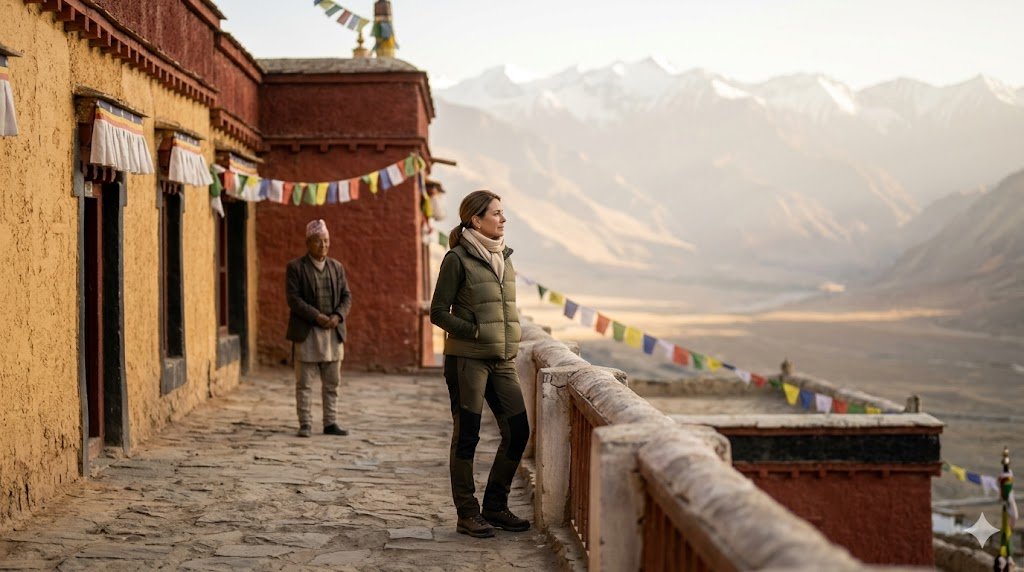
There is a category of experience in Nepal that cannot be scaled. It exists at the intersection of trust, timing, and genuine local relationship — and it is available only to parties that an operator is fully committed to, rather than managing alongside several others.
A private audience with a head lama is not something that can be arranged through a booking system. It happens because a relationship has been maintained with that monastery over many years — visits made, respect demonstrated, goodwill built through something other than transactional exchange. When we offer this to a party traveling with us, we are drawing on that relationship entirely. It cannot be offered to two parties in the same week without diminishing what it means.
The same is true of the family dinner in a Newari home in Bhaktapur. The private access to a closed festival ceremony. The morning at the local school in a Mustang village that the children's parents agreed to because they know and trust the person who asked. These are not products. They are the accumulated result of years of being genuinely embedded in the communities we work with.
A volume model cannot offer these things — not because operators running that model lack the desire to, but because genuine community trust cannot be industrialised. It is built one relationship at a time. It can only be honoured one party at a time.
What this means for the journey you have
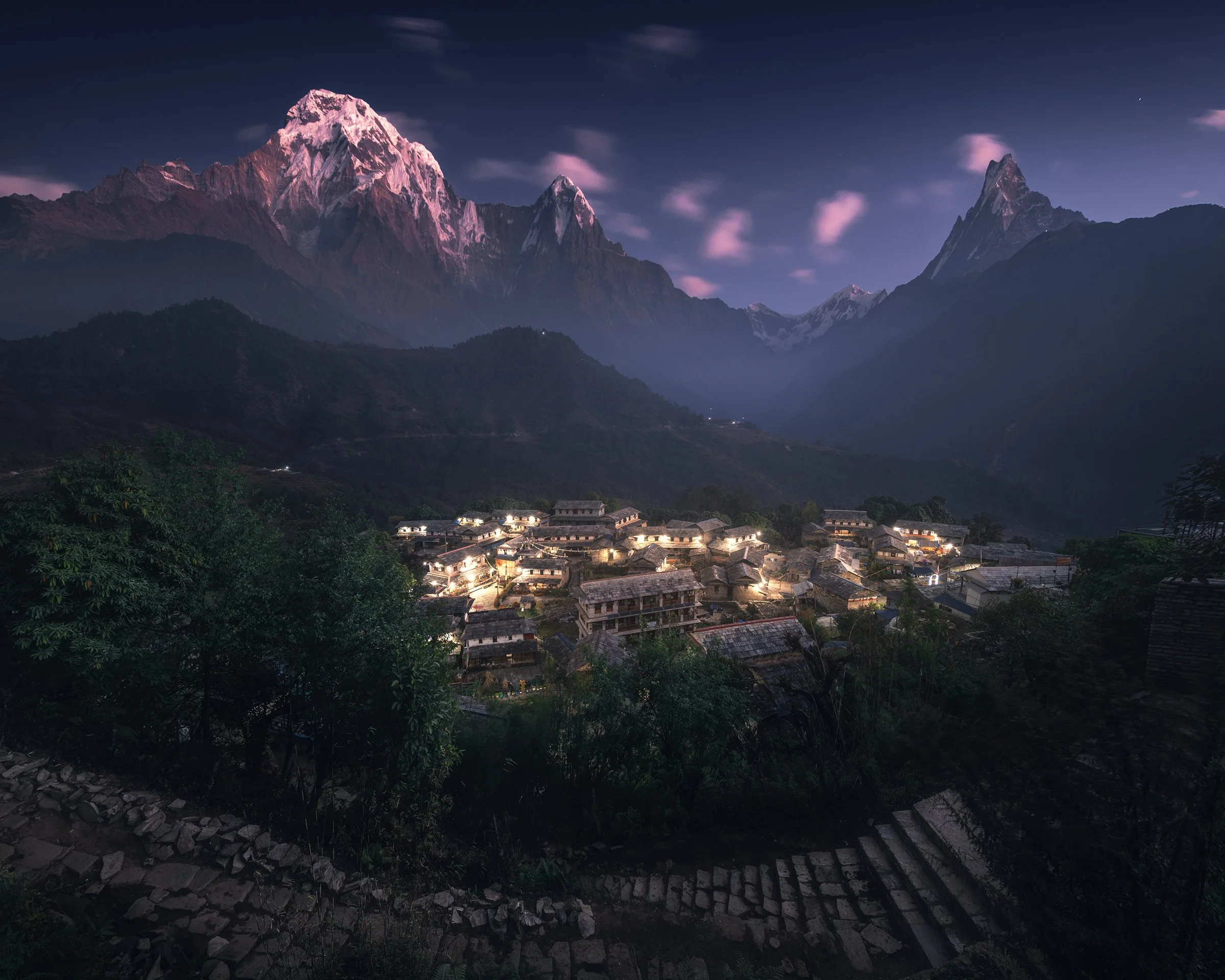
We are sometimes asked whether the one-party model makes a difference to the actual experience of traveling in Nepal, or whether it is primarily a matter of principle.
The honest answer is that it makes a difference to almost everything.
The pace is yours. There is no group schedule to accommodate. If you want to spend three hours in a monastery because the conversation with the resident monk took an unexpected turn and everyone in your party is absorbed, you spend three hours. If you want to leave earlier than planned because the weather is perfect for a helicopter approach to a ridge that is usually obscured, you leave. The itinerary serves you — not the other way around.
The moments are unrepeatable. When you are the only party we are focused on, we notice things that volume management prevents. The light on a particular valley at a particular time. The festival preparation happening in a village that is not on any standard itinerary. The conversation with a local elder that opens a door to something we had not planned. These moments happen because someone is fully paying attention — and because they have the freedom to act on what they notice without consulting a schedule shared with other groups.
The relationship is real. By the end of a journey with us, we know your party — what moves you, what you find interesting, what you want more of and what you have had enough of. This knowledge shapes each day as it unfolds. It is the difference between a service and a conversation.
Why we turn bookings away
We want to be transparent about what the one-party model requires of us as a business.
It means our capacity is genuinely limited. We cannot grow revenue simply by taking more bookings. We cannot solve a slow month by running two journeys simultaneously. When a week is committed, it is committed entirely — and a second inquiry for that week receives a respectful decline and, if the timing works, an offer to discuss a different date.
This is not always easy. There are weeks when the inquiry that arrives is exactly the kind of journey we would love to design, and the answer has to be not now.
We have made peace with this because the alternative is something we are not willing to become. The moment we start running two parties simultaneously, the model changes — subtly at first, then fundamentally. The guide's attention divides. The relationships get rationed. The contingency planning gets spread thinner. The experience becomes very good instead of exactly right.
Very good is not what we built Nepal as a Local to offer.
Who this is for
The one-party model is not for everyone. It is not the most cost-efficient way to experience Nepal. There are reputable operators who run well-organised group experiences at a fraction of what a private journey costs, and for some travelers, that is the right fit.
We are for travelers who have decided that this journey matters enough to do it without compromise. Who want Nepal's most extraordinary experiences — the ones that exist at the intersection of local trust, precise timing, and genuine attention — available to them without sharing or dilution. Who understand that the thing they are paying for is not a list of itinerary items but a complete and undivided commitment from the people responsible for their experience.
For those travelers, the one-party model is not a constraint. It is the entire point.
A note on what we offer
Every journey begins with a conversation — not a brochure, not a package selection, not a form. A conversation about what you are looking for, what Nepal means to you, and what kind of experience would make this the journey you remember above the others.
From that conversation, we design everything. One party at a time. Always.
Nepal as a Local designs exclusively private Himalayan journeys — one party at a time, with no compromises on access, pace, or experience. If you are ready to begin the conversation, we would like to hear from you.